1

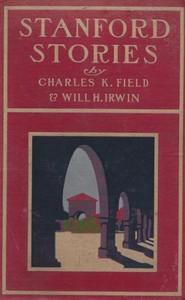
Stanford Stories: Tales of a Young University — A Reader’s Guide
(0 User reviews)
165
Project Gutenberg
2008
Not confirmed
Short stories; Stanford University -- Fiction; College stories, American; Stanford (Calif.) -- Fiction
Readers of public-domain and historical texts
Project Gutenberg digital edition
en
Edition facts
Words
57,694
Reading time
251 min
Text sections
7
This digital edition of Stanford Stories: Tales of a Young University — A Reader’s Guide is described by source-level measurements including 57,694 words, 4 hr 11 min estimated reading time, and 7 detected text sections.
The text analysis averages about 17.5 words per sentence, while the detected sections provide another way to judge how the source is divided.
Project Gutenberg metadata also associates the work with “Short stories,” connecting these edition facts with the source record’s subject description.
Source:
Project Gutenberg record #24735
An editorial note examining the authorial choices in diction, dialogue, and description in Field and Irwin's 1900 collection of Stanford stories, focusing on slang, collegiate voice, and the tension between fiction and local fact.
Read the complete public-domain text at its original source.
Read on Project GutenbergThe authors' prefatory note declares that they have not edited the conversation of characters from the standpoint of the English purist, a decision that shapes every page. In the opening story, Pellams Chase is described as having a smile that was the point of one of his Club stunts, and the narrative voice freely uses phrases like 'tres fatigué' and 'a bird of a josh.' This slang is not merely decorative; it establishes a specific undergraduate register that the authors treat as integral to their portrait of Stanford life. The dialogue, too, is peppered with colloquialisms such as 'hot jolly' and 'peacherino,' which the authors present without apology or translation.
Slang as a Marker of Collegiate Identity
The authors' willingness to let characters speak in the idiom of the 1890s undergraduate is a deliberate authorial choice. In A Midwinter Madness, Pellams tells Katharine, 'They're all alike; they can't understand having a straight friendship for a girl without it's being a puppy-love.' The contraction 'it's' for 'its' and the phrase 'straight friendship' are period-specific, but more importantly, they signal a code shared among students. The narrative does not gloss these terms; it trusts the reader to infer meaning from context. This approach extends to the depiction of group dynamics: when Jimmy Mason whistles 'with a look that meant: "You wait, old josher till you get into the Knockery again!"' the word 'josher' and the proper noun 'Knockery' are left unexplained, reinforcing the insiders' perspective.
Dialogue as a Vehicle for Character and Conflict
Field and Irwin use dialogue not only to advance plot but to reveal character through verbal tics and interruptions. In the excerpt, Pellams's speech is marked by self-interruption and rhetorical questions: 'Not your first, is it?' and 'In what way do you—' The dash indicates a cut-off thought, a technique that mimics natural speech. Katharine, by contrast, speaks in more measured, ironic sentences: 'Your philosophy of heaven includes a josh on the other fellow, I verily believe.' The authors also use dialogue to stage disagreements about social conventions, as when Katharine challenges Pellams's assumption that she would sacrifice other friendships for his joke. This tension between the male prankster ethos and a female character's independent perspective is a recurring structural element.
Description Anchored in the Stanford Landscape
The physical setting is rendered with precise, unadorned details that ground the stories in a specific place. The Quadrangle pillars, the 'Ninety-five Oak, and the palm-circles are named without fanfare, as if the reader already knows them. The authors also use setting to underscore social observation: when Pellams and Katharine walk 'down the arcade together, in the face of Jimmy Mason, the loafers, the whole crowd shifting between lectures,' the arcade becomes a stage for public scrutiny. The description of Pellams's smile—'Every muscle got into the interference and his round face grew rosy into the roots of his thick brown hair'—borrows a football metaphor ('interference') to describe a facial expression, blending the athletic and the social.
The Prefatory Note as a Contract with the Reader
The authors' prefatory note is a key paratext that shapes how the stories are read. It states that the stories are fiction, with two exceptions ('Pocahontas, Freshman' and 'Boggs' Election Feed') that were 'suggested by local occurrences,' and that 'One Commencement' is 'mainly fact.' This admission of a factual core for some tales invites the reader to speculate about which details are drawn from life. The note also acknowledges that the authors have not 'edited the conversation of the characters from the standpoint of the English purist,' framing the slang not as a flaw but as a deliberate documentary choice. This transparency about authorial method is unusual for a collection of this period and signals a commitment to representing undergraduate speech authentically.
Readers attentive to the authors' craft will notice how the slang, dialogue patterns, and descriptive shorthand work together to create a cohesive collegiate world. The prefatory note provides a useful key: treat the stories as fictionalized ethnography, where the authors are as interested in capturing the tone of student life as in telling a plot. The excerpts suggest that the collection rewards attention to small verbal details—a cut-off sentence, a borrowed sports term, a named tree—that cumulatively build a portrait of a young university and its inhabitants.
Reading how Field and Irwin bent campus slang to fit a story’s mood, I thought of old sermons and Sunday-school tales—those quieter voices also shaping young lives on paper. Both books hold a certain tenderness for their moment, a snapshot of voices trying to be true. Silas X. Floyd's Short Stories for Colored People Both Old and Young Entertaining, Uplifting, Interesting — Key Ideas to Explore carries that same gentle ache of a world remembered, one story at a time.
There are no reviews for this eBook.
There are no comments for this eBook.
Reader reflection
Take a moment to reflect on this book
Create a short personal record of your experience with this book.
Your progress
0
/
10
2
What was your overall reaction to the book?
3
Would you recommend this book to another reader?
4
How easy was the book to follow?
5
Would you like to discuss this book with someone?
6
Which part made the strongest impression?
7
How much did the book move you?
8
How useful did the reading feel?
9
Which lesson or insight stayed with you?
10