1

Picture stuff — Context and Discussion
(0 User reviews)
3019
Project Gutenberg
2025
Not confirmed
Short stories; Air pilots -- Fiction; Airplanes -- Fiction; Stunt flying -- Fiction
Readers of public-domain and historical texts
Project Gutenberg digital edition
en
Edition facts
Words
7,987
Reading time
35 min
Text sections
1
The source record for Picture stuff — Context and Discussion measures this digital text at 7,987 words, 35 min estimated reading time, and 1 detected text section.
The text analysis averages about 13.6 words per sentence, while the detected sections provide another way to judge how the source is divided.
Project Gutenberg metadata also associates the work with “Short stories,” connecting these edition facts with the source record’s subject description.
Source:
Project Gutenberg record #76115
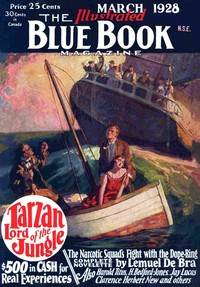
In this 1928 sky-aventure story, a veteran pilot's distrust of camera-ship crews collides with a midair crisis when a stunt pilot's plane tangles with a camera ship, forcing a rescue that tests skill and nerve above a California field.
Read the complete public-domain text at its original source.
Read on Project GutenbergFrom its opening lines, “Picture Stuff” establishes a wary, first-person voice that has soured on the very machinery of aerial filmmaking. The narrator, a member of the Brooks’ Flying Circus, recounts how veteran pilot Russ Healy “commenced to dislike camera-ship pilots” after a midair collision nearly killed him. The story’s tension is built not on villainy but on the inherent hazard of mixing stunt flying with camera work—a conflict that the excerpts develop through precise technical details: rip-cord fumbles, wing-warped planes, and the specific weight of a Jenny called the “Old Lady.”
Voice and the Veteran’s Grudge
The narrator’s tone is laconic and knowing, peppered with aviation slang (“shoot stuff,” “flivvered him into the hospital”) that signals insider experience. Russ Healy’s refusal to fly near camera ships is presented not as cowardice but as hard-won caution: “When I see a movie ship in the air—I nose down and land.” The story’s opening pages build a quiet, fatalistic mood through a string of accidents—a busted leg, a nosed-over plane, a failed flare—that make the reader feel the outfit’s grinding attrition. The narrator and Russ sit on oil cans, smoking, wondering “who’d get it next,” but keeping that guesswork to themselves. This understated camaraderie, set against accumulating mishaps, primes the reader for the larger crisis to come.
The Midair Collision as Technical Set Piece
The crash sequence is rendered with a pilot’s eye for spatial relationships and mechanical failure. The narrator, having jumped from his D.H., watches the tangled camera-ship and Jenny spin together, noting that “the nose of the camera-ship seemed jammed into the rear cockpit of the Jenny; her left wing slanted up over the tail-assembly of the Old Lady.” The description avoids melodrama; instead, it tracks the ships’ behavior—their spin, the wire scream, the splintered prop—and the narrator’s own descent rate (“seventeen feet a second”). The most striking detail is the girl, Miss West, lying across the wing surface with her left arm hooked through a stunting loop, her parachute pack dangling uselessly. The story withholds her name until after the rescue, keeping the focus on the mechanical problem of getting her down.
The Old Lady’s Final Flight
The climax turns on a sudden, almost miraculous separation of the two planes. The narrator recalls having seen the same thing once before, “in France”—a rare nod to past experience that lends credibility to the event. The Old Lady, battered but still flying, noses down, then comes up and makes a controlled landing with the girl still clinging to the wing. The prose is clipped and functional: “The Old Lady was trying to fly—was trying to fly out of it!” The landing itself is described with minimal flourish—wheels and tail-skid touch the clipped grass—and the girl speaks “bravely.” The story’s emotional payoff is understated, trusting the reader to recognize the skill and luck required to bring a damaged plane and an unconscious passenger down safely.
Patterns of Risk and Restraint
Throughout the excerpts, the story balances technical jargon with a plainspoken awareness of mortality. The narrator never glamorizes the danger; instead, he notes that a ’chute opening “only a hundred feet off the ground” makes a fellow do some thinking. The repeated phrase “too close for comfort” becomes a quiet refrain. The camera-ship pilots are described as “crazy,” the crank-boys as “crazier,” yet the story’s own camera—the narrator’s eye—remains steady, recording failures and near-misses without editorializing. This restraint gives the rescue its weight: when the Old Lady comes in flying, the reader feels the accumulated tension of earlier crashes and the narrator’s own hard landing.
Readers should pay attention to the story’s use of the first-person plural—“we” hit Bakersfield, “we” pulled Sid Lunn out—which creates a collective identity for the flying outfit. The narrator never names himself, remaining a witness rather than a hero. This choice keeps the focus on the planes, the pilots, and the physics of flight. The excerpts suggest a story more interested in how things work—and how they fail—than in individual glory.
The rain kept me glued to that old pilot’s story, his wary eye on the camera crews, until the midair tangle forced his hand. Afterwards, I sat with the quiet unease of rescue and ruin, which drifted me toward the stranger corners of family loyalty in The Parenticide Club — Themes and Context. Both left the same damp hush in the room.
There are no reviews for this eBook.
There are no comments for this eBook.
Reader reflection
How did this book work for you?
Your answers remain private and are stored only in this browser.
Your progress
0
/
10
2
Was reading this book enjoyable?
3
Would you encourage someone else to read it?
4
Did the language feel accessible?
5
Which element worked best for you?
6
How original did the book feel?
7
Did the story or argument move comfortably?
8
Is this a title worth rereading?
9
Which lesson or insight stayed with you?
10