1

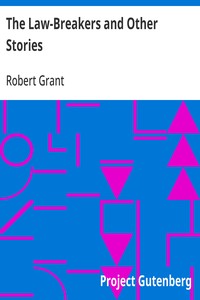
The Law-Breakers and Other Stories — Background and Themes
(0 User reviews)
1451
Project Gutenberg
2005
Not confirmed
Short stories; Legal stories; United States -- Social life and customs -- 20th century -- Fiction; Attorney and client -- Fiction
Readers of public-domain and historical texts
Project Gutenberg digital edition
en
Edition facts
Words
45,544
Reading time
199 min
Text sections
5
The source record for The Law-Breakers and Other Stories — Background and Themes measures this digital text at 45,544 words, 3 hr 19 min estimated reading time, and 5 detected text sections.
The text analysis averages about 18.3 words per sentence, while the detected sections provide another way to judge how the source is divided.
Project Gutenberg metadata also associates the work with “Short stories,” connecting these edition facts with the source record’s subject description.
Source:
Project Gutenberg record #7763
Robert Grant's collection of eight stories examines moral dilemmas and social pressures in turn-of-the-century America, using legal and domestic settings to probe characters' compromises between principle and desire.
Read the complete public-domain text at its original source.
Read on Project GutenbergThe opening story, “The Law-Breakers,” introduces George Colfax, a self-described “passive reformer” who reads the Nation, votes for the best candidates, and contributes a dollar a year to civil-service reform—yet does nothing else. Grant establishes his method early: a narrator who dissects a character’s self-image with ironic precision, exposing the gap between stated ideals and actual conduct. The collection’s recurring interest in how people rationalize their choices appears in the very first paragraphs, as George’s indignation is directed at a woman he wishes to marry. Across the eight stories, Grant moves between city offices, seaside cottages, and drawing rooms, using these settings to stage conflicts over money, property, and personal loyalty.
The Structure of Moral Accounting
Grant organizes each story around a moment of decision or revelation, often involving a financial or legal transaction. In “The Law-Breakers,” George’s outrage is tested by a concrete ethical challenge; in “Across the Way,” the Ripley sisters face an offer of half a million dollars for their seaside property. The narrator frequently tallies what characters owe—to themselves, to others, to their stated principles. This accounting is literal in the case of George’s one-dollar subscription, but also figurative: characters weigh affection against ambition, honesty against comfort. The stories tend to open with a settled situation—a courtship, a routine, a cherished home—then introduce a disruptive proposition that forces a reckoning. Grant rarely resolves these reckonings neatly; instead, he leaves the reader to assess the balance sheet.
Recurring Images: The Honeysuckle and the Automobile
Two images recur across the excerpts: the cultivated garden and the mechanical intruder. In “Across the Way,” Miss Rebecca snips a straggling tendril from a honeysuckle vine while negotiating the sale of her home; the garden represents a way of life rooted in patient, personal labor. The automobile, by contrast, belongs to the wealthy neighbor Daniel Anderson, whose “liveried grooms” have unsettled the household staff. The broker’s “gay blue flower” in his lapel—a cheap, mobile ornament—mediates between these worlds. Grant uses such details to compress social conflict into visible objects: the garden is a place of attachment, the automobile a force of displacement. The tension between rootedness and mobility, between what is made by hand and what is bought, runs through the collection.
Movement Between Public and Private Scenes
Grant shifts between scenes of private conversation and public performance. George Colfax’s indignation is first displayed to a woman he hopes to marry; the Ripley sisters’ deliberation occurs in their garden, but is prompted by a broker’s visit. The stories often begin in domestic interiors or familiar outdoor spaces, then move toward encounters that test those spaces. In “The Law-Breakers,” the opening paragraphs establish George’s public persona as a censor and gentleman before the private conversation reveals its limits. This movement is not merely spatial but tonal: the narrator’s ironic commentary in public passages gives way to more direct emotional stakes in private exchanges. The effect is to show characters performing for different audiences—and to suggest that the most consequential judgments happen away from public view.
Voice and the Limits of Sympathy
Grant’s narrator maintains a cool, analytical distance, even when describing characters’ most intimate hopes. George is “a censor and a gentleman”; the Ripley sisters are introduced through their habitual roles—Miss Rebecca as spokesman, Miss Carry as the younger sister still treated as “almost a very young person.” The narrator reports their thoughts without endorsing them, leaving room for the reader to judge. This restraint extends to dialogue: characters speak in complete, measured sentences, rarely betraying raw emotion. When Miss Rebecca exclaims “The man must be crazy,” the outburst is immediately followed by a detached action—snipping a tendril—that reasserts composure. Grant’s voice thus creates a world where strong feelings are contained by social forms, and where the most telling revelations come not from what characters say but from how they frame their choices.
Readers will find that Grant’s stories reward attention to small gestures—a flower rearranged, a subscription renewed, a tendril cut. The collection does not offer heroes or villains, but rather a series of characters caught between what they believe and what they want. The legal and financial frameworks that give the book its title are less about courtroom drama than about the everyday contracts people make with themselves. Approaching these stories as linked studies in compromise, rather than as plots to be resolved, will bring their quiet tensions into focus.
Sometimes I finish a book and it stays with me, like a quiet afternoon I can't quite forget. That's how I felt about The Law-Breakers, and its careful look at how we bend our own rules. It made me think of the older stories in Selected Stories of Bret Harte — Key Ideas to Explore, where the frontier asks the same hard questions of people, just under a wider sky.
There are no reviews for this eBook.
There are no comments for this eBook.
Reader reflection
How did this book work for you?
Your answers remain private and are stored only in this browser.
Your progress
0
/
10
2
How much did you enjoy the reading experience?
3
How likely are you to recommend this book?
4
How much effort did this book require?
5
How would you rate its originality?
6
Did the book deliver what you hoped for?
7
Would you like to discuss this book with someone?
8
How understandable was the text?
9
Which lesson or insight stayed with you?
10