1

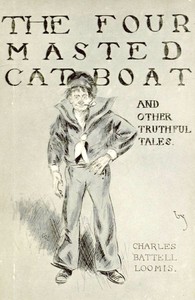
The Four-Masted Cat-Boat, and Other Truthful Tales — Text and Context
(0 User reviews)
92
Project Gutenberg
2020
Not confirmed
Humorous stories, American; Short stories, American; American fiction -- 19th century; Manners and customs -- Fiction
Readers of public-domain and historical texts
Project Gutenberg digital edition
en
Edition facts
Words
38,063
Reading time
166 min
Text sections
43
This digital edition of The Four-Masted Cat-Boat, and Other Truthful Tales — Text and Context is described by source-level measurements including 38,063 words, 2 hr 46 min estimated reading time, and 43 detected text sections.
The text analysis averages about 19.7 words per sentence, while the detected sections provide another way to judge how the source is divided.
Project Gutenberg metadata also associates the work with “Humorous stories, American,” connecting these edition facts with the source record’s subject description.
Source:
Project Gutenberg record #63863
A collection of humorous sketches and stories by Charles Battell Loomis, featuring absurd premises, playful language, and satirical takes on American manners. The title story imagines a four-masted cat-boat, while others parody literary conventions, dialect, and domestic life.
Read the complete public-domain text at its original source.
Read on Project GutenbergThe title story of this collection promises a “four-masted cat-boat,” a nautical impossibility that sets the tone for the absurdities to follow. Loomis’s preface disarms the reader with a mock apology: the sketches are united only by being “done by the same hand—or hands, as they were written on a typewriter.” This self-deprecating humor pervades the volume, which ranges from parodies of Sherlock Holmes to tales of a “truthful burglar” and a calculating bore. The author’s voice is consistently playful, often breaking the fourth wall or layering incongruous dialects for comic effect.
The Art of the Absurd Premise
Several sketches hinge on a single ridiculous idea pushed to its logical extreme. In “A New Use for Horses,” the narrator proposes using horses as a means of transportation—a notion treated as revolutionary. “Instinct Supplied to Hens” imagines a device that artificially provides hens with maternal instinct. These premises are delivered with deadpan seriousness, the narrator treating the absurd as perfectly reasonable. The humor arises from the gap between the outlandish concept and the matter-of-fact tone. Loomis often undercuts his own logic mid-sentence, as when the preface admits that linking the sketches with recurring characters “would have been a great bother.” This casual dismissal of narrative convention is a recurring structural joke.
Dialect, Parody, and Linguistic Play
Loomis delights in mixing dialects and registers. In “How ’Rasmus Paid the Mortgage,” the character ’Rasmus switches between African American Vernacular, Irish brogue, German-accented English, and Scots in a single speech: “Massa, Ah’s a free man, Ah know Ah is; but avick, ’t is a mighty shmall wan Oi’d be if I wouldn’t help out a poor omadhaun like yerself.” The effect is deliberately jarring, mocking the literary convention of consistent dialect. Similarly, “The Dialect Store” satirizes the vogue for regional speech by imagining a shop where one can buy dialects by the yard. Parodies of specific writers appear in “À la Sherlock Holmes” and “From the French,” the latter lampooning translated fiction. Loomis’s linguistic agility is a central pleasure of the collection.
Social Satire and Domestic Comedy
Beneath the farce, Loomis targets American social rituals and pretensions. “At the Chestnuts’ Dinner” skewers the awkwardness of formal dining, while “The Rough Words Society” imagines a club dedicated to verbal abuse. “A Spring Idyl” and its inverted counterpart play with romantic conventions, the second version subverting the first. The satire is gentle rather than biting; Loomis seems more amused than indignant. Even in the melodramatic “How ’Rasmus Paid the Mortgage,” the hero’s crime—robbing a drunk lawyer—is treated as a cheerful caper, complete with a cuckoo-clock countdown. The collection’s subtitle, “Truthful Tales,” is of course ironic: these stories are deliberately, gleefully untruthful, and the reader is always in on the joke.
Readers will find that the sketches reward dipping in and out rather than sequential reading. The humor is period-specific but still accessible, relying on wordplay and situation rather than obscure references. Loomis’s light touch and willingness to break his own frame make this a diverting sample of late-nineteenth-century American comic writing. The illustrations by Florence Scovel Shinn add a visual dimension to the absurdity.
There’s a peculiar comfort in the way Loomis finds truth hiding inside absurdity—a four-masted cat-boat feeling more honest than half our daily talk. That same quiet twinge comes back to me with The snow-image, and other twice-told tales — A Closer Reading, where snow melts and leaves something real behind. I keep returning to both, like old friends who don’t need to say much.
There are no reviews for this eBook.
There are no comments for this eBook.
Reader reflection
What did you think of this book?
Answer a few questions and save a private reflection on this device.
Your progress
0
/
10
2
What was your overall reaction to the book?
3
Would you encourage someone else to read it?
4
How much effort did this book require?
5
Did the book meet your expectations?
6
How would you rate its originality?
7
Did the book give you something worth debating?
8
Did the story or argument move comfortably?
9
What is the main idea you are taking away?
10