1

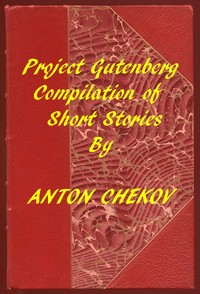
Project Gutenberg Compilation of Short Stories by Chekhov — Reading Notes
(0 User reviews)
96
Project Gutenberg
2018
Not confirmed
Russia -- Social life and customs -- Fiction; Chekhov, Anton Pavlovich, 1860-1904 -- Translations into English; Short stories, Russian -- Translations into English; Russian fiction -- Translations into English
Readers of public-domain and historical texts
Project Gutenberg digital edition
en
Edition facts
Words
1,060,632
Reading time
4612 min
Text sections
107
Before opening Project Gutenberg Compilation of Short Stories by Chekhov — Reading Notes, the edition data offers a quick orientation: 1,060,632 words, 76 hr 52 min estimated reading time, and 107 detected text sections.
The text analysis averages about 16.1 words per sentence, while the detected sections provide another way to judge how the source is divided.
Project Gutenberg metadata also associates the work with “Russia -- Social life and customs -- Fiction,” connecting these edition facts with the source record’s subject description.
Source:
Project Gutenberg record #57333
This editorial note examines how Chekhov's opening, middle, and later excerpts guide a first reading of his short stories, focusing on narrative voice, moral ambiguity, and structural patterns.
Read the complete public-domain text at its original source.
Read on Project GutenbergThe first excerpt from "A Nervous Breakdown" introduces a medical student, Vassilyev, whose moral outrage at a brothel district escalates into a personal crisis. Chekhov immediately establishes a pattern of psychological intensity: Vassilyev's horror at the women's fate—"they are alive!"—is rendered through repetitive, breathless prose. The narrative voice shifts between his internal turmoil and the cold logic of his friend, the artist, who dismisses his anguish as "the devil knows what." This tension between empathy and detachment recurs throughout the collection.
Opening Excerpts: Establishing Moral Urgency
The opening pages of "A Nervous Breakdown" plunge the reader into a heated debate about prostitution. The medical student calculates that each woman "dies because she has in her time to entertain five hundred men," a statistic that transforms abstract vice into a concrete horror. Chekhov does not let the reader settle into a comfortable judgment: the artist retorts that there is "more vice in your expression than in the whole street." This back-and-forth forces the reader to weigh competing moral frameworks. The excerpt ends with Vassilyev alone, terrified of the snow and darkness, his mind spiraling toward a breakdown. The narrative voice here is intimate yet clinical, recording his symptoms—"I am going to have a breakdown"—as if from a case study.
Middle Excerpts: The Weight of Indifference
Later in the same story, Chekhov shifts to a more detached register. Vassilyev lies in bed, "shuddering all over," and tries to apply a systematic method to the problem of saving fallen women. The narrator notes that "the method for attacking problems of all kinds was, as he was an educated man, well known to him." This ironic observation undercuts the student's earnestness, suggesting that intellectual frameworks fail in the face of human suffering. The prose becomes almost parodic in its enumeration of his efforts: "He recalled the history of the problem and its literature." Yet the emotional weight remains, as he paces the room, unable to escape the image of those women. Chekhov uses this contrast between systematic thought and visceral horror to deepen the story's moral complexity.
Later Excerpts: The Unresolved Question
As the story progresses, the narrative refuses to offer a resolution. Vassilyev's friends dismiss his anguish, and he is left alone with his terror. The final lines of the excerpt show him lying on his bed, repeating "They are alive!" The repetition mimics obsessive thought, and the story ends without a clear outcome. Chekhov does not tell us whether Vassilyev recovers or descends further into madness. This open-endedness is characteristic of his later work, where moral questions are posed but not answered. The reader is left to sit with the discomfort, much like the protagonist. The narrative voice remains steady, almost reportorial, even as the content grows increasingly disturbing.
Structural Patterns Across the Collection
The excerpts from "A Nervous Breakdown" reveal a recurring structural pattern in Chekhov's stories: a sudden moral confrontation, a heated debate, and a retreat into isolation. The opening dialogue between the medical student and the artist sets up a clash of worldviews that recurs in stories like "The Bet" and "The Duel." Chekhov often uses a small group of characters to dramatize larger ethical conflicts. The setting—a snowy Moscow street, a dimly lit room—reinforces the sense of entrapment. The narrative voice maintains a cool distance even when describing intense emotion, a technique that forces readers to draw their own conclusions. This pattern rewards careful attention to the first few pages, which often contain the story's central tension.
Reading Chekhov's stories in this compilation, pay close attention to the opening pages: they often contain the seed of the entire narrative. The moral debates, the sudden shifts in tone, and the unresolved endings are not flaws but deliberate strategies. Chekhov trusts his readers to sit with ambiguity. Let the excerpts guide you, but do not expect neat conclusions.
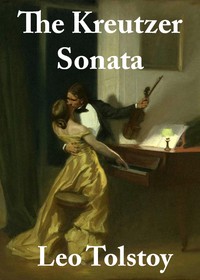
That rainy afternoon, I kept returning to Chekhov’s pauses—the way his characters hesitate at doorways, uncertain what they want. The notes made me notice his quiet moral fog, and I found myself wishing for a sterner voice. Later, almost by accident, I pulled down The Kreutzer Sonata and Other Stories — A Closer Reading, and Tolstoy’s relentless clarity felt like a cold drink after warm tea.
There are no reviews for this eBook.
There are no comments for this eBook.
Reader reflection
How will you remember this book?
Save your reaction, strongest insight, and memorable passage.
Your progress
0
/
10
2
Did this book hold your interest?
3
Would you encourage someone else to read it?
4
How much effort did this book require?
5
How did the reading compare with what you expected?
6
How personally connected did you feel to the book?
7
How valuable was this book for your own interests?
8
Was the book moving at the right speed?
9
In one sentence, what did you learn?
10