1

Bad and mad — Reading Notes
(0 User reviews)
1905
Project Gutenberg
2025
Not confirmed
Short stories; Western stories; Brothers -- Fiction; Twins -- Fiction
Readers of public-domain and historical texts
Project Gutenberg digital edition
en
Edition facts
Words
5,960
Reading time
26 min
Text sections
1
This digital edition of Bad and mad — Reading Notes is described by source-level measurements including 5,960 words, 26 min estimated reading time, and 1 detected text section.
The text analysis averages about 16.6 words per sentence, while the detected sections provide another way to judge how the source is divided.
Project Gutenberg metadata also associates the work with “Short stories,” connecting these edition facts with the source record’s subject description.
Source:
Project Gutenberg record #75071
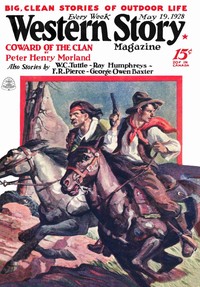
In W. C. Tuttle's 1928 western, twin brothers Ben (a sheriff) and Harry (an outlaw) confront each other at a water hole. The story's structure alternates between tense standoffs and ironic banter, using mirrored appearances and recurring motifs of heredity and justice.
Read the complete public-domain text at its original source.
Read on Project GutenbergThe story opens with a man kneeling at a water hole, caught off guard by a rifle-wielding figure who “popped up like a Jack-in-a-box.” The immediate recognition—both are identical twins—sets up a structure built on mirrored appearances and moral opposition. Sheriff Ben and outlaw Harry are “as alike as two peas,” yet their first exchange pivots on heredity: Harry blames his crookedness on blood, while Ben scoffs. This tension between sameness and difference drives the narrative, which moves from the water hole to a jail cell and back again, each shift testing the brothers’ uneasy bond.
Mirror Images and Moral Contrasts
The twins’ physical identity is emphasized repeatedly: “both smooth shaven, slightly grizzled, neither of them carrying an ounce of surplus weight. Even their clothes were pretty much the same.” Yet their roles could not be more opposed—one is a sheriff, the other a bank robber. This contrast is not merely visual; it structures their dialogue. Harry’s sarcastic misquote of Burns (“Oh, would some power the giftie give us, to see ourselves as others see us”) underscores the irony that Ben sees Harry as a criminal, while Harry sees Ben as a self-righteous twin. The story uses their identical appearance to create a series of mistaken-identity complications, as when Harry later impersonates Ben to escape jail.
Movement Between Water Hole and Jail
The narrative moves through two primary settings: the isolated water hole where the brothers first meet, and the Oro City jail where Harry is held. The water hole is a liminal space—a place of chance encounter and shifting power. The jail, by contrast, is a fixed point of authority, but one that proves permeable. Harry’s escape involves swapping clothes and badges with a deputy, exploiting the very likeness that trapped him. The story’s structure thus alternates between open, uncertain spaces and confined, rule-bound ones, each location shaping the characters’ actions and the story’s pace.
Recurring Motifs of Heredity and Fate
Harry repeatedly invokes heredity as an excuse: “Heredity’s what ails me, I suppose.” Ben rejects this, asking, “Why didn’t it affect me?” This debate recurs throughout, culminating in Harry’s final, bitter agreement with a deputy’s assessment that he is “crazy.” The motif of fate versus choice is woven into the dialogue, with Harry’s sardonic humor masking a deeper fatalism. The story does not resolve this tension; instead, it leaves the reader to weigh the twins’ competing views. The repeated references to “seeing ourselves as others see us” reinforce the idea that identity is partly a matter of perception and circumstance.
Voice and Vernacular in Dialogue
Tuttle’s dialogue is marked by colloquial western speech: “You better put yore hands up, pardner,” “Well, what won’t yuh see when yuh ain’t got no gun!” The twins’ exchanges are laced with sarcasm and familial familiarity. Harry’s line, “You allus was a lovin’ brother,” is delivered with a grin, undercutting the threat of Ben’s rifle. The sheriff’s gruffness contrasts with Harry’s flippancy, yet both share a clipped, rhythmic cadence. This vernacular not only establishes setting but also reveals character: Harry’s wit is a shield, Ben’s bluntness a sign of duty. The dialogue carries the story’s emotional weight, often doing more than the sparse narration.
Readers should attend to how Tuttle uses the twins’ identical appearance not as a gimmick but as a structural device that questions whether character is innate or imposed. The story’s brevity—under six thousand words—means every scene and line of dialogue counts. Pay particular attention to the shifts in power between the brothers, and how the setting of each scene—open range versus locked cell—mirrors their internal conflicts.
There’s something about twins in that old western—the way justice and blood keep circling each other at the water hole. It stayed with me quietly, like a half-finished thought. I found the same lingering ache in One jump ahead — A Reader’s Guide, where the hunt feels less like action and more like remembering. Funny how a story can leave you sitting still, just turning it over.
There are no reviews for this eBook.
There are no comments for this eBook.
Reader reflection
What did you think of this book?
Answer a few questions and save a private reflection on this device.
Your progress
0
/
10
2
How did the book work for you overall?
3
Would you recommend this book to another reader?
4
Did the language feel accessible?
5
Which part made the strongest impression?
6
How did the reading compare with what you expected?
7
How personally connected did you feel to the book?
8
How would you rate its originality?
9
What changed or sharpened your thinking?
10