1

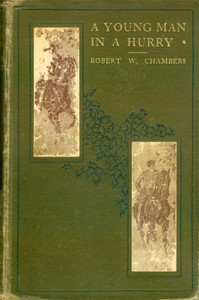
A Young Man in a Hurry, and Other Short Stories — Inside the Classic
(0 User reviews)
95
Project Gutenberg
2008
Not confirmed
Short stories; United States -- Social life and customs -- Fiction
Readers of public-domain and historical texts
Project Gutenberg digital edition
en
Edition facts
Words
70,195
Reading time
306 min
Text sections
9
The source record for A Young Man in a Hurry, and Other Short Stories — Inside the Classic measures this digital text at 70,195 words, 5 hr 6 min estimated reading time, and 9 detected text sections.
The text analysis averages about 14.6 words per sentence, while the detected sections provide another way to judge how the source is divided.
Project Gutenberg metadata also associates the work with “Short stories,” connecting these edition facts with the source record’s subject description.
Source:
Project Gutenberg record #27374
Chambers' collection of short stories features a recurring tension between haste and reflection, seen in the title story's frantic opening and the later dialogue-driven tale of a horse sale. The excerpts reveal a preference for abrupt character interactions and vivid, sensory settings.
Read the complete public-domain text at its original source.
Read on Project GutenbergThe collection opens with a young man bursting from an office at ten minutes to five, suit-case and umbrella in hand, racing down a spiral staircase as scrub-women flee. This kinetic energy—leaping pails, flattening gentlemen, a blond lisping “Gee!”—sets a tone of comic urgency. Yet the stories also slow to quieter exchanges, as in the later excerpt where a woman named Constance negotiates the sale of her mare, The Witch, with a horseman named Burleson. Their conversation meanders from horse-trading to personal candor, revealing Chambers’ interest in the friction between social convention and impulsive honesty.
Speed and Stillness in the Opening Story
The title story, “A Young Man in a Hurry,” establishes a pattern of physical haste that contrasts with moments of arrested motion. The protagonist’s dash down marble steps, his leap into a cab, and the cab’s lurching journey through snow are rendered in short, breathless clauses: “Down-town flew the cab, swaying around icy corners, bumping over car-tracks.” Yet inside the cab, the narrative slows to a standstill—two silent occupants “huddled in separate corners” brood at their windows. This juxtaposition of frantic movement and frozen interiority recurs throughout the collection. Chambers uses snow, sleet, and darkness to isolate characters in transit, creating pockets of stillness amid the rush. The opening’s comic energy (scrub-women fleeing, a lisped exclamation) also hints at a wry tone that may undercut the earnestness of later stories.
Dialogue as a Game of Candor and Evasion
In the later excerpt, Burleson and Constance’s conversation moves through a series of abrupt shifts that mirror the title story’s erratic pace. Burleson’s speech “flicker[s] from one subject to another without relevance,” as when he declares the country “only matched in paradise” moments after discussing horse prices. Constance notes that his English is “no vehicle for the conveyance of his ideas,” yet she finds his company pleasurable. Their exchange about selling The Witch involves a moral quandary—whether to ask more than the mare cost—that Burleson dismisses with a laugh, comparing usury to “the theory of Pythagoras.” This blend of ethical uncertainty and playful absurdity suggests Chambers uses dialogue to probe social norms without resolving them. The characters’ candor (Burleson asking for her first name) and evasion (Constance’s careful replies) create a dynamic of approach and retreat.
Recurring Motifs: Horses, Snow, and the Unexpected
Two motifs visible in the excerpts—horses and snow—may thread through the collection. The mare The Witch is a central object in the second excerpt, and the title story’s cab is drawn by a horse, linking urban and rural settings. Snow appears as a sensory detail: “gray with whirling snowflakes” in the opening, and later “sleet-smeared lamps.” These elements ground the stories in a specific American landscape of the early 1900s, where transportation (by cab, train, or horse) shapes encounters. Chambers also introduces unexpected turns: a forest-fire mentioned as a joke, a sudden proposal of a visit to Constance’s father. These moments of surprise, often undercut by laughter, suggest a pattern where characters’ plans are derailed by impulse or circumstance. The excerpts do not reveal whether these motifs unify the collection, but they appear as deliberate anchors.
Readers may find it useful to attend to the rhythm of each story—how Chambers alternates between breathless action and still, reflective dialogue. The title story’s frantic opening is not typical of all pieces; later tales may favor quieter tensions. Pay particular attention to moments when characters laugh at their own dilemmas, as this seems a signature gesture. The collection rewards those who read for tonal shifts and the unexpected turns in conversation.
That afternoon, rain ticked against the windows while I reread the frantic horse-trading scene, struck by how the characters’ haste buried their quieter hesitations. It reminded me of another volume I’d shelved years ago, one that lingered on the same Southern tension between motion and stillness—Southern Lights and Shadows — Background and Themes. I pulled it down, and the afternoon turned gentle.
There are no reviews for this eBook.
There are no comments for this eBook.
Reader reflection
What did you think of this book?
Answer a few questions and save a private reflection on this device.
Your progress
0
/
10
2
Was reading this book enjoyable?
3
Would you recommend this book to another reader?
4
What was the reading difficulty like?
5
How much did the book move you?
6
How distinctive were its ideas or approach?
7
What was the strongest part of the book?
8
Did the book deliver what you hoped for?
9
Which lesson or insight stayed with you?
10