1

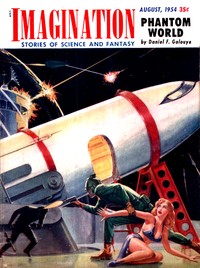
The Dangerous Scarecrow — Story, Setting & Ideas
(0 User reviews)
932
Project Gutenberg
2021
Not confirmed
Short stories; Horror tales; Siblings -- Fiction; Farms -- Fiction
Readers of public-domain and historical texts
Project Gutenberg digital edition
en
Edition facts
Words
5,806
Reading time
26 min
Text sections
1
For The Dangerous Scarecrow — Story, Setting & Ideas, the stored edition analysis reports 5,806 words, 26 min estimated reading time, and 1 detected text section.
The text analysis averages about 16.4 words per sentence, while the detected sections provide another way to judge how the source is divided.
Project Gutenberg metadata also associates the work with “Short stories,” connecting these edition facts with the source record’s subject description.
Source:
Project Gutenberg record #66394
In Carl Jacobi's 1954 horror story, two children secretly arm their neighboring scarecrows with a knife, leading to unsettling consequences. The narrative builds tension through the children's perspective and the gradual transformation of the scarecrows from playmates to threats.
Read the complete public-domain text at its original source.
Read on Project GutenbergThe story opens with a deceptively pastoral scene: two scarecrows, Mr. Maudsley and Mr. Trask, stand in adjacent cornfields on an October evening. The children, Jimmy and Stella, regard them with fond familiarity, noting details like the foil ribbon Jimmy fastened to Mr. Trask's hat. Their parents dismiss the children's whispers as harmless imagination. But the boy's nighttime vigil, using a silver spyglass to watch the scarecrows, introduces an undercurrent of unease. The careful description of the farmyard—the ball bat, the pump, the silo like a castle tower—grounds the story in a specific, tangible setting before the first hint of strangeness emerges.
The Children's Perspective
The narrative is filtered almost entirely through Jimmy and Stella. Their dialogue reveals a private world where scarecrows are not just props but individuals with preferences and moods. Jimmy gives Mr. Trask a knife, a detail that carries weight precisely because it is presented without adult commentary. The children's secrecy—Jimmy extracts a promise from Stella to "cross your heart and hope to die"—suggests they understand their actions transgress some unspoken boundary. Yet their motivations remain ambiguous: are they playing, testing limits, or responding to something the scarecrows communicate? The reader is left to infer, as the adults do not.
The Scarecrows as Characters
Jacobi grants the scarecrows a peculiar kind of presence. They are described with anthropomorphic details: Mr. Maudsley's trousers balloon in the wind, his hand nailed to a pie-tin that catches moonlight; Mr. Trask's hat is bright with foil. The children speak of them as if they can appreciate gifts. Later, after the knife is given, Mr. Trask's position changes—a detail Jimmy notices through his spyglass. The scarecrows are never shown moving, but the evidence of movement accumulates. The story's horror derives from this ambiguity: are the scarecrows animate, or are the children projecting? The text refuses to settle the question.
The Role of the Parents
Mr. and Mrs. Tapping provide a foil to the children's secret world. They are preoccupied with mundane concerns: reading the newspaper aloud, discussing taxes and distant news. When Mr. Tapping reads about a decapitation in New Orleans, the parallel to the scarecrows—whose heads have been tampered with—is left unspoken. The parents' obliviousness heightens the tension. They dismiss the children's whispers, fail to notice the missing knife, and never look closely at the scarecrows. Their presence underscores the isolation of Jimmy and Stella, who must navigate the growing threat without adult intervention.
The Unsettling Transformation
By the later excerpt, the scarecrows have changed. Mr. Maudsley's head is back in place but "only tied on—it was not the same; it looked very dead." The children have done their best to repair him, but the damage is evident. The word "dead" is striking: it implies the scarecrow was once alive, or at least convincingly lifelike. The children's game has escalated beyond their control. The final scene, with the family playing parchesi while the scarecrows stand in the fields, creates a stark contrast between domestic normalcy and the uncanny. The story ends before the threat is resolved, leaving the reader to imagine what the scarecrows might do next.
Readers should attend to the story's careful use of sensory detail—the moonlight, the creaking house, the train whistle—to build atmosphere. The scarecrows are never explicitly supernatural; the horror lies in what is implied but not shown. Pay attention to the children's limited perspective: they see more than the adults, but not everything. The story rewards close reading of its small, precise observations.
Reading Jacobi’s scarecrows again, I remember how the children’s quiet scheming felt so real—play turning solemn without anyone noticing. There’s a particular ache in that, the way stories can hold both mischief and menace. It reminds me of a small yellowed edition of Stories of Comedy — Reading Notes, where laughter always seemed to have a shadow nearby. Funny how those old pages stay with you.
There are no reviews for this eBook.
There are no comments for this eBook.
Reader reflection
How will you remember this book?
Save your reaction, strongest insight, and memorable passage.
Your progress
0
/
10
2
What was your overall reaction to the book?
3
Would you encourage someone else to read it?
4
What was the reading difficulty like?
5
Would you read this book again?
6
Was the book moving at the right speed?
7
How well did it match your expectations?
8
How clear did the writing feel?
9
What is the main idea you are taking away?
10