1

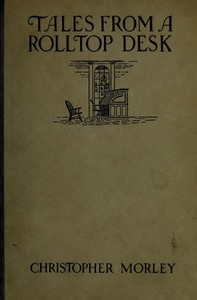
Tales from a Rolltop Desk — Story, Setting & Ideas
(0 User reviews)
356
Project Gutenberg
2016
Not confirmed
New York (N.Y.) -- Fiction; Authors -- Fiction; Short stories, American; Man-woman relationships -- Fiction; Publishers and publishing -- Fiction
Readers of public-domain and historical texts
Project Gutenberg digital edition
en
Edition facts
Words
59,679
Reading time
260 min
Text sections
7
Tales from a Rolltop Desk — Story, Setting & Ideas can be approached with a clearer sense of reading commitment from its source measurements: 59,679 words, 4 hr 20 min estimated reading time, and 7 detected text sections.
The text analysis averages about 15.5 words per sentence, while the detected sections provide another way to judge how the source is divided.
Project Gutenberg metadata also associates the work with “New York (N.Y.) -- Fiction,” connecting these edition facts with the source record’s subject description.
Source:
Project Gutenberg record #51957
Christopher Morley's linked stories follow a young publisher's misadventures in 1920s New York, using recurring motifs of lunch, commutation tickets, and alleyways to weave a satirical portrait of Grub Street life.
Read the complete public-domain text at its original source.
Read on Project GutenbergChristopher Morley's Tales from a Rolltop Desk opens with a dedication that sets the tone: a letter to publisher Frank Nelson Doubleday recalling a young man's brash job interview. This framing device establishes the book's milieu—the publishing world of 1920s New York—and its blend of affection and satire. The stories that follow are linked by recurring images: the rolltop desk itself, commutation tickets for lunch, and alleys that serve as both literal and symbolic passages. Morley's narrator moves through a city of chop-houses, editorial offices, and street corners, where chance encounters and repeated meals create a pattern of comic déjà vu.
The Commutation Ticket as Structural Motif
The commutation ticket—a prepaid book of lunch vouchers—appears in multiple excerpts as a device that drives both plot and theme. In one episode, the narrator buys a hundred-meal ticket at the Commutation Chophouse, only to find the same mutton chop, baked potato, and beans served day after day. This repetition becomes a running joke, but also a structural anchor: the ticket binds the characters to a specific location and routine. Morley uses it to explore the tension between novelty and monotony in urban life. The ticket also functions as a social token, exchanged between friends who take turns buying lunch. Its recurrence across stories suggests that the book's episodes are not random but linked by such small, tangible objects.
Alleys and Thresholds: Movement Between Worlds
Alleys serve as transitional spaces in Morley's New York. In one scene, characters peer into a dusky alley behind a restaurant, where spilled beans become a symbol of something spilled or lost. The alley connects Beekman Street to the chophouse, but also to a different mode of perception—Dove, the more observant character, uses it to question the reality of the meal they've just eaten. Later, the narrator and Dulcet walk through alleys to find a second restaurant that serves identical food, blurring the boundaries between establishments. These thresholds mark shifts between public and private, known and unknown, and suggest that the city's geography is layered with hidden correspondences.
Recurring Meals and the Comedy of Sameness
Food is a constant in these excerpts, but it is almost always the same food: mutton chop, baked potato, baked beans, coffee, cheese cake. The repetition is deliberate, almost absurdist. When the narrator buys a hundred lunches, he imagines variety, but the chophouse serves the identical meal each day. This sameness becomes a source of humor and mild horror—"the vision of a hundred repetitions of any meal, however good, is rather ghastly." Morley uses the repeated menu to comment on the routines of publishing life, where days blur into one another. Yet the characters accept it with good humor, suggesting a wry resignation to the cycles of work and leisure.
Voice and the Unreliable Narrator
The narrator's voice is genial but evasive. He reports conversations and events without always grasping their implications. In the dedication, he describes his younger self as "misguided" and "tremulous with ambition," but the stories themselves rarely show him reflecting deeply. Instead, he observes, jokes, and moves on. This creates a gap between what the reader perceives and what the narrator admits. For instance, when Dove suggests the lunch might be a hallucination or a trick, the narrator brushes it off. The reader is left to wonder whether the strange coincidences are real or imagined. Morley's choice to keep the narrator slightly obtuse adds a layer of irony to the tales, inviting the reader to read between the lines.
Morley's stories reward attention to small details: the repeated meals, the alleys that connect disparate places, the commutation ticket that binds episodes together. These recurring elements give the collection a coherence that a simple series of anecdotes might lack. Readers who enjoy noticing patterns—the same cheese cake appearing in different restaurants, the way characters keep meeting at the same corners—will find a sly, cumulative comedy. The rolltop desk of the title, never fully described, becomes a symbol for the clutter and hidden compartments of the publishing world itself.
Reading about the young publisher’s restless commutes and those narrow Manhattan alleys, I found myself thinking of the patient mountain face in The Great Stone Face, and Other Tales of the White Mountains — Key Ideas to Explore. Both worlds ask what a life becomes when shaped by hurried days versus steady, silent watching. Morley's ink-stained haste felt, suddenly, like only one kind of waiting.
There are no reviews for this eBook.
There are no comments for this eBook.
Reader reflection
What did you think of this book?
Answer a few questions and save a private reflection on this device.
Your progress
0
/
10
2
How much did you enjoy the reading experience?
3
Is this a title you would suggest to others?
4
What was the reading difficulty like?
5
Did any part of the book feel personally relevant?
6
How valuable was this book for your own interests?
7
What did you think about the pace?
8
How did the reading compare with what you expected?
9
What did this book teach you most?
10