
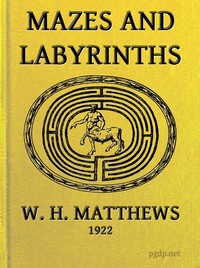
Mazes and Labyrinths: A General Account of Their History and Development
Okay, forget everything you think you know about boring history books. Mazes and Labyrinths reads like a friendly expert giving you a grand tour of a weird and wonderful obsession.
The Story
There's no fictional plot, but there is a fantastic mystery: why do these patterns appear across the entire world and throughout all of history? Matthews acts as your guide. He starts with the famous Labyrinth of Crete from Greek myth, then shows you real ones carved on ancient Roman floors, woven into Native American baskets, and set into the stones of medieval cathedrals. The "story" is his journey to connect all these dots, proving that the human desire to create and solve mazes is a universal thread.
Why You Should Read It
What hooked me was how personal it feels. Matthews isn't just listing facts; he's sharing a genuine fascination. You get his excitement over finding a turf maze in an English village or his clear explanation of the difference between a puzzle maze (where you can get lost) and a unicursal labyrinth (a single, winding path to the center). It makes you look at the world differently. You'll start seeing labyrinth designs in places you never noticed before.
Final Verdict
This is the perfect book for curious minds who love trivia, history, or design. If you've ever doodled a maze in a notebook, gotten lost in a corn maze in the fall, or stared at a intricate pattern on an old building and wondered "why?"—this book is for you. It's a classic for a reason: it's the foundation that every modern book on the subject builds upon, written with a charm that hasn't faded a bit.
This title is part of the public domain archive. Enjoy reading and sharing without restrictions.
Kimberly Thompson
1 year agoGood quality content.
Richard Torres
1 year agoCitation worthy content.








Ava Perez
1 year agoThe index links actually work, which is rare!